Momsieeeee ❤️🩹
Every soul needs nurturing, not only by loving ourselves but by loving one another. I learned this through you.
When I needed a lift, you were there. When my heart needed rebuke, you gave it. And when my ‘ancoreny’ jokes needed someone to laugh with, you were there, too.
I am still in disbelief, grieving your passing. If love was about keeping score, I’d like to think that I was there for you as much as you were for me. I loved you deeply, even when I failed to show up in many occasions. Praise God, ours was a relationship built on grace and mutual support but Momsie, you win.
I remember that morning you called me to ask about our wedding cake. In your signature gentle voice, you asked, “Kumusta ka?” “Okay naman Momsie, why?” was my reply.

You didn’t know what I had gone through the previous night—how I tried several times to place an order online but went to bed tired and frustrated. So when you said, “I want to give you a cake,” my heart literally leapt for joy. That call was an unexpected blessing, a reflection of the selfless love you always showed, a tangible proof of God’s providence.
I remember tagging along in one of your visits to the grocery. I was amazed that you didn’t have a list but you didn’t go beyond the budget. You were Holy Spirit-led even in the grocery store.
You showed me a love that never judged nor condemned, a love that gently corrected me and embraced me unconditionally.
Remember our time together at the Araneta Coliseum for the “Just Give Me Jesus” event? We were seated near the bleachers and there you joyfully shared that you no longer practiced your old religion. Your courage inspired me, big time.
Our conversations often centered on how we could further God’s kingdom with the resources He has already given, trusting that He would multiply our efforts.

I also remember the first time I saw tears in your eyes as you lamented the selfishness of this world. It was a powerful, tenderhearted moment that showed how deeply you cared for others.
You patiently guided and coached me to tread gracefully, to let go of my fears, and to learn to trust.

Listening to you courageously and honestly share your life has been a source of deep learning for me. Application is always the difficult part, yet as we have learned and experienced in uniquely personal ways, God never abandons us to figure things out on our own. He graciously walks alongside us, pouring out His love and embracing us in His truth and presence day by day, moment by moment.

Momsie, if life was a computer game, I lost a huge percentage of my life bars now that you’re fully asleep. I am power-less without you. I know you’ll rebuke me for that and point me back to who our Source is.
“Now, brothers, we want you to know the truth about those who have died; otherwise, you might become sad the way other people do who have nothing to hope for. For since we believe that Yeshua died and rose again, we also believe that in the same way God, through Yeshua, will take with him those who have died.” 1 Thessalonians (1 Th) 4:13-14 CJB
“Mga kapatid, nais naming malaman ninyo ang katotohanan tungkol sa mga namatay na upang hindi kayo magdalamhati tulad ng mga taong walang pag-asa. Dahil naniniwala tayong si Jesus ay namatay at muling nabuhay, naniniwala din tayong bubuhayin ng Diyos upang isama kay Jesus ang lahat ng mga namatay na sumasampalataya sa kanya.” 1 Mga Taga-Tesalonica 4:13-14 MBBTAG12
In the movie Gladiator, Maximus is speaking to a fellow prisoner who asks him about his family.
Fellow Prisoner: What will you do?
Maximus: I will have my vengeance, in this life or the next.
Fellow Prisoner: You have a family?
Maximus: I had a family.
Fellow Prisoner: Do you think you’ll see them again?
Maximus: Not yet.
Maximus expresses his longing for his wife and son, who were killed. The fellow prisoner urges him to let go of his grief, but Maximus, reflecting on his loved ones, firmly replies:
“I will have my vengeance, in this life or the next.”
As he grapples with his grief and the purpose behind his fight, he envisions his family and reaffirms his commitment to live and seek vengeance for them. The emotional weight of his memories leads him to remind himself, “Not yet,” signifying that he still has work to do before he can be with them again.
Such moment captures the deep sense of loss Maximus feels and his determination to honor his loved ones by continuing to fight.
Momsie, though your death calls for no vengeance, Maximus’ grief resounds deeply in me. Wala na ang nag-iisa kong Momsie whom I loved and trusted dearly. God, our Heavenly King, has taken you back Home. Grief is hard but I will choose to press on, keeping my eyes on Jesus, the Author and Perfecter of our faith. I believe this is what you would have me do.
Sabi ni little Kuya Hope, “Don’t worry about your best girl, when your mission is done you will hug her again in Heaven.”
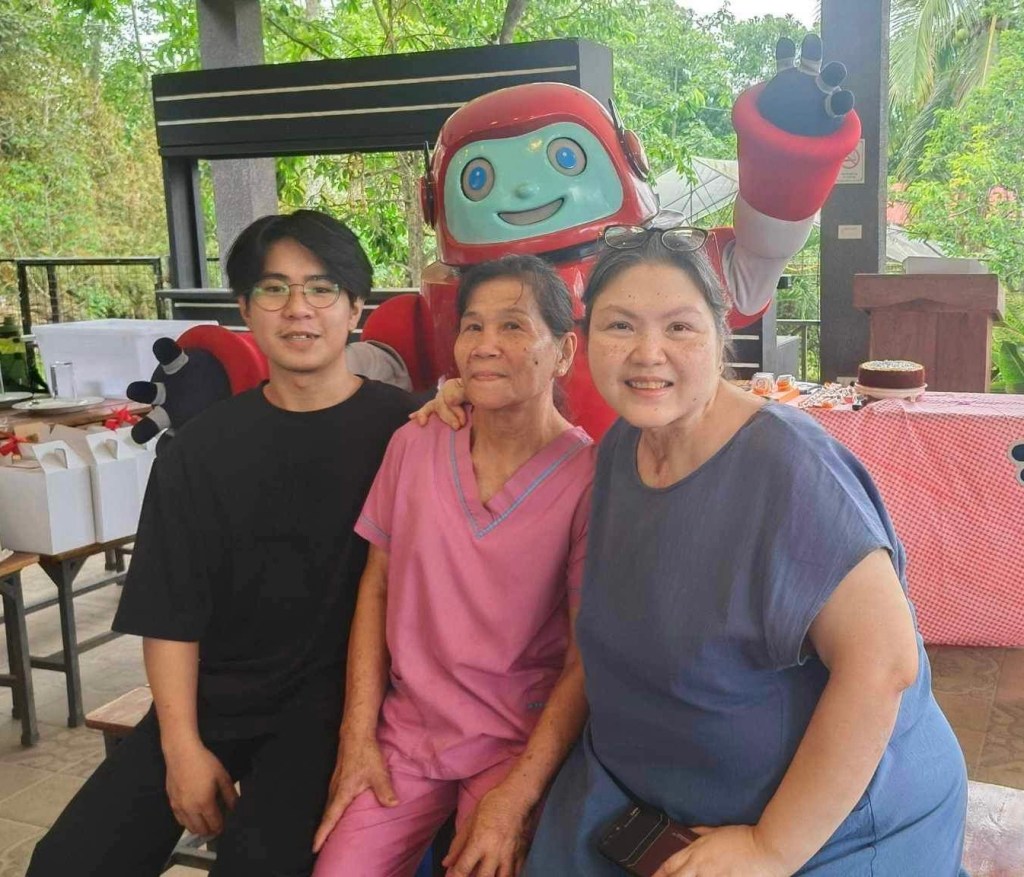

Momsie, I will never forget you. I will miss you. Thank you for all the warm hugs and all the prayers you uttered on our behalf. Thank you soooo much for being the mom our souls needed. We’ll see each other in the next, but Lord-willing, not yet.
 ancore!