I was all alone in a food court in Ortigas. I didn’t have a bag with me. I had less than Php100 in my pocket and my nearly-drained tablet.
I left my mom with a lady friend in the hotel we were booked in for my DIY breakfast wedding.
I thought things through for the nth time. All details were set. People we invited confirmed they’ll be there.
“Will it glorify God?” was the question.
Will it glorify God if I just… disappeared?
I woke up the next morning, mom and I and my lady friend were even able to have a short devotional. Mom braided my hair with DIY hairpins. I did my own makeup.
For some reason, another lady friend thought it best to lock me in a friend’s car with the aircon off for so many minutes before letting me in.
Perhaps to ensure that I won’t run away?
Anyway, by the grace of God, our small wedding pushed through . We exchanged our vows. Everyone came and went, until it was only my husband and I left.
We got enough cash to settle the restaurant bills.
We had enough to last our first week together.
And we had just enough to cover the first three months of our rented home.
Just enough.
It’s been almost 13 years since then.
The question I have now is: “Is God more glorified in and through me today than He was, 13 years ago?”
Meanwhile.
A bride-to-be disappeared on December 10th this year, just 4 days before her wedding. She fit her wedding dress. Last communication with her fiancé was about wedding shoes: she was going to buy a pair.
She wore a black jacket over black pants, and rubber shoes. She left her phone at home and only had a coin purse with her.
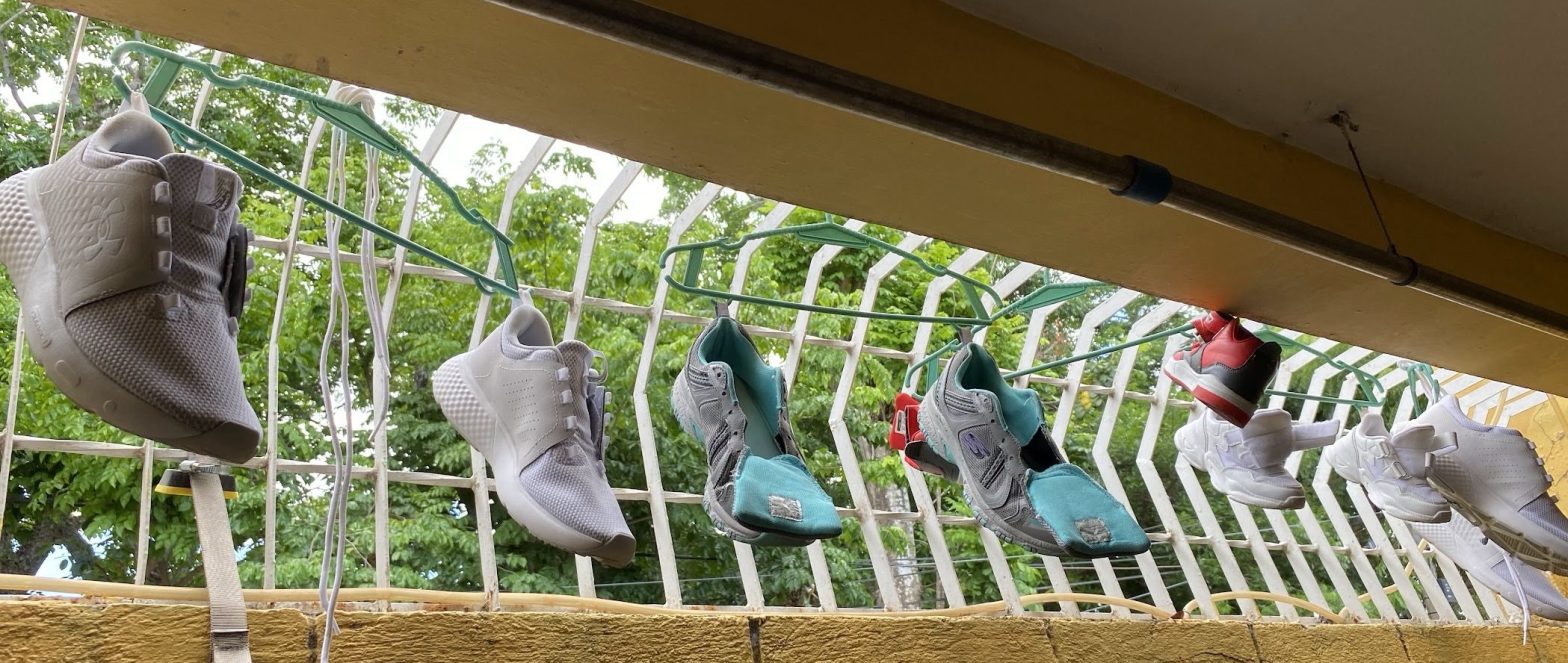
I’m not imeldific – I can’t afford to be one. So it takes a looooot of time for me to find “the perfect fit” by myself. Thankfully, my fiancé back in 2012 mall-hopped with me so I can decide and find the pair that would best fit my dress. (I actually wanted for us to wear running shoes but he didn’t agree.)
Anyway. So where is the bride-to-be?
I can only guess, in the simplest of ways, that perhaps she got awfully tired of looking for the perfect pair of shoes and chose to disappear.
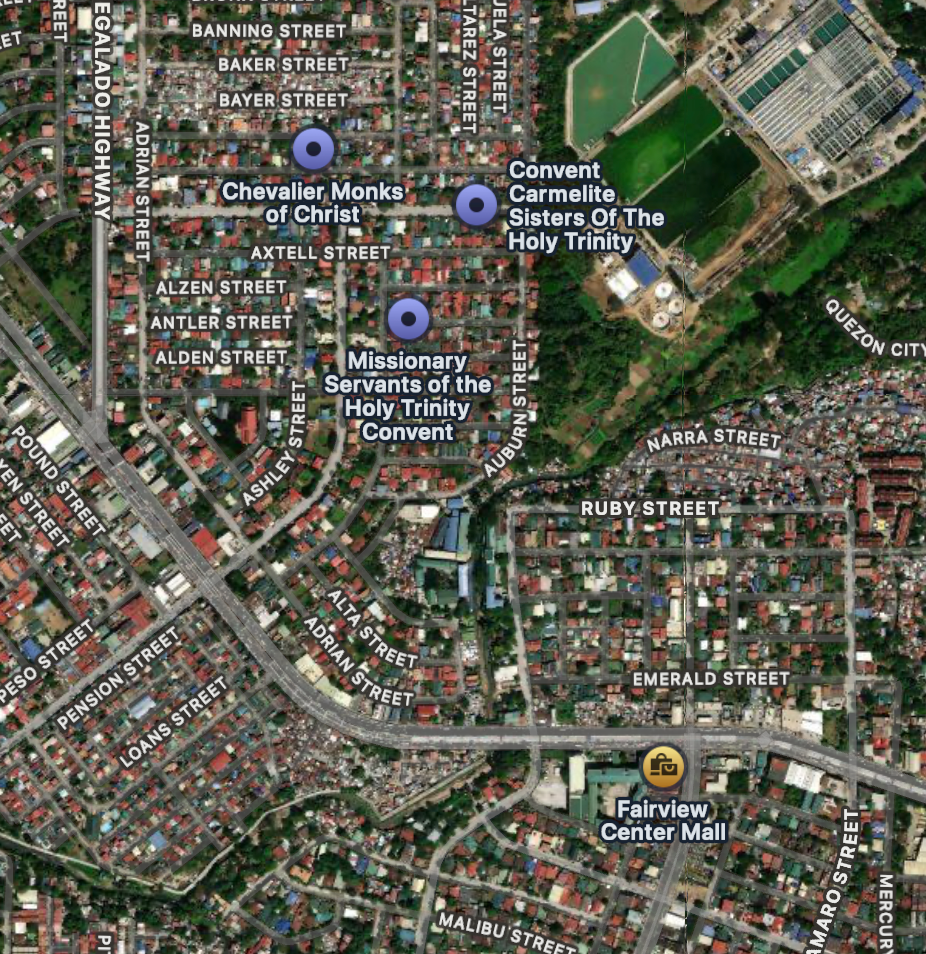
People say there are monasteries in the vicinity where she was last seen. Perhaps she’s there.
The Fairview Center Mall (FCM) is where the bride-to-be was going to buy her shoes. Could she be in one of the three monasteries in the area?
Will this missing person search glorify God? I have no doubt it will – it does, as we speak.
Proverbs 25:2, NASB: “It is the glory of God to conceal a matter, But the glory of kings is to search out a matter.”
As I watched my six-year-old wiggle through kids’ church yesterday, I saw God’s love in action—His rules paired with grace create a “wiggle room” where we can grow. Allow me to boast in the LORD whose faithfulness has always been my portion.
Grateful for People I’m blessed and honored to have mutual follows with some of the best REAL people on X. My account is small so if you’re following me on X or other platforms and reading this, know that I’m eternally grateful for you. I’m choosing not to stress about any algorithm or trend. Years ago, a painful experience taught me that God is easier to please than people and when I prioritize pleasing Him instead, life becomes pleasantly peaceful.
God’s Order in Christian Parenting Fast forward to October 19, 2025, a Sunday. I was with my husband, our six-year-old son, and one of my sisters in the worship hall for the 6pm service. My mom was cheerfully serving as an usher at the doors.
Earlier, I watched my son in the 3pm kids’ church from a distance. He was all over the place—running, jumping from mat to mat, playing with other boys. Yet, for a good part of the program, he sat on the mat, listened, obeyed instructions, watched the live Bible story on stage, and answered pop-quiz Bible questions with other kids aged 6 and up. I smiled as he raised his hand a number of times to ask questions or to be allowed to speak.
How do you handle a group of kids needing bathroom breaks while still meeting a learning goal? I observed a Lifeshaper as she prepared to take my son and other kids to an area outside the hall. She handed them a flat rope with rings and let each kid hold onto a ring to stay with the group. With each step, she literally walked them through the day’s big idea (“God helps me to bless others”) and memory verse: “My body and my mind may become weak, but God is my strength. He is mine forever” (Psalm 73:26 ICB). She sat them in a circle and gave clear instructions to go one at a time. My son waited patiently for his turn. It seemed a bit too long but, thankfully, he was able to hold it in.
I don’t love rules, yet as a parent, I’m a stickler for order. I’ve learned that rules and order go hand-in-hand. Without clear rules, there’s no semblance of order. God is a God of order and peace, and His rules are given out of love—to protect us, not restrict us; to nurture our free will, not suppress it; not only for aesthetics but fully for His glory.
Wiggle Room of God’s Love I get frustrated when people disobey rules, but the older I get, the more I see that humanity benefits with a bit of wiggle room. That wiggle room is called love. Watching the Lifeshaper lovingly create space for the kids to learn and grow, I knew there’s something my family and I must do. (More on this in a future post, Lord-willing.)
During the 6pm service, we stood together. One of the songs, “Stand Strong” is memorable for me as my husband and I sang with our hands entwined, arms raised in worship to our God. That wasn’t something we normally do as a couple. By God’s grace, we weren’t campaigning—we were championing something bigger than ourselves. We’re championing each other as co-heirs in God’s Kingdom. We’re championing marriage as God designed it, tearing down idols, breaking unhealthy cycles, and pruning dysfunctions. We’re two imperfect people championing the perfect cause of Christ down the line. We don’t have millions of followers or net worth, but we have a mustard seed of faith planted in our hearts. That’s more than enough for us to persevere, as my life verse reminds me:
“Not that I have already obtained this or am already perfect, but I press on to make it my own, because Christ Jesus has made me his own. Brothers, I do not consider that I have made it my own. But one thing I do: forgetting what lies behind and straining forward to what lies ahead, I press on toward the goal for the prize of the upward call of God in Christ Jesus.” (Philippians 3:12-14 ESV)
A Legacy of Faith Years ago, when I was a volunteer in kids’ church, a guy gave me a poster with this verse: “But by the grace of God I am what I am, and his grace toward me was not in vain. On the contrary, I worked harder than any of them, though it was not I, but the grace of God that is with me.” (1 Corinthians 15:10 ESV)
I’ve long lost that poster, but the guy who gave me that poster is now my husband of nearly 13 years. On top of the pounds and grey hairs we’re gaining, we have Christ. We have a son growing in Christ, a Mama serving Christ, and families getting to know Christ. And, yes, we have a lot of wiggle room in Christ. We’ll keep pressing on, working hard, and persevering. In between and along the way, we’ll make time for rest and play.
Thank you for reading! Where is God giving you “wiggle room” to grow in faith right now? Share your thoughts in the comments below or tag me on X when you do. Shabbat Shalom!